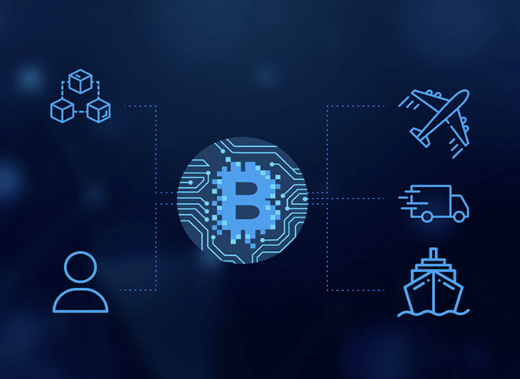

Blockchain adds an immutable, time-stamped ledger to supply chains, enabling real-time visibility and data integrity across partners. It reduces fragmentation by aligning data models and governance in interoperable frameworks. Smart contracts automate compliance and cross-border settlements, while verifiable provenance replaces paper trails with cryptographic proof. Scaling from pilot to production requires structured governance and standardized interfaces. The result is transparent, autonomous execution within multi-party networks—a development that invites closer scrutiny of implementation challenges and governance.
How Blockchain Improves Traceability and Trust
Blockchain enhances traceability and trust by recording every transaction and movement of goods in an immutable, time-stamped ledger. The analysis focuses on data integrity, auditability, and real-time visibility, enabling precise reconciliation across ecosystems.
Blockchain metrics measure throughput, latency, and fault tolerance, informing governance models that balance decentralization with compliance. This framework supports transparent risk assessment, standardization, and scalable decision-making for freedom-minded networks.
Eliminate Paper Trails With Verifiable Provenance
The move from enhanced traceability and trust to eliminating paper trails centers on replacing manual,紙-based records with a verifiable provenance system built on immutable digital ledgers.
A blockchain-enabled framework delivers clear, auditable lineage, reducing unclear provenance and providing tamper evidence through cryptographic seals, timestamped events, and distributed consensus.
This shift strengthens data integrity, but requires governance and standards to sustain transparency.
Automate Compliance and Payments With Smart Contracts
Automating compliance and payments with smart contracts enables deterministic, code-driven enforcement of agreed terms and timely settlement processes. The approach enhances data governance by encoding audit trails, validation rules, and dispute resolution logic into immutable workflows.
It streamlines cross-border settlement, reduces latency, and lowers operating costs while preserving transparency, security, and governance controls for stakeholders seeking autonomous, auditable execution without manual intervention.
See also: The Future of Artificial Intelligence in Smart Cities
From Pilot to Production: Scaling Blockchain in Supply Chains
From pilot deployments to production-scale implementations, scaling blockchain in supply chains demands a disciplined, architecture-driven approach that aligns data models, governance, and interoperability across partners.
The trajectory hinges on robust standardization, scalable consensus, and modular infrastructures enabling global adoption.
Ensuring interoperability among heterogeneous systems reduces fragmentation, accelerates adoption, and preserves traceability, security, and auditability throughout multi-party networks.
Conclusion
Blockchain-empowered supply chains steadily refine visibility and trust by replacing fragile paper trails with verifiable provenance and tamper-evident records. The technology enables precise auditability, efficient cross-border settlements, and automated compliance through smart contracts, all while maintaining governance alignment across partners. As pilots mature into production, interoperability and standardized data models become the quiet backbone supporting scalable, autonomous execution. In essence, blockchain offers a careful, incremental enhancement to operational resilience and stakeholder confidence.


 By
By